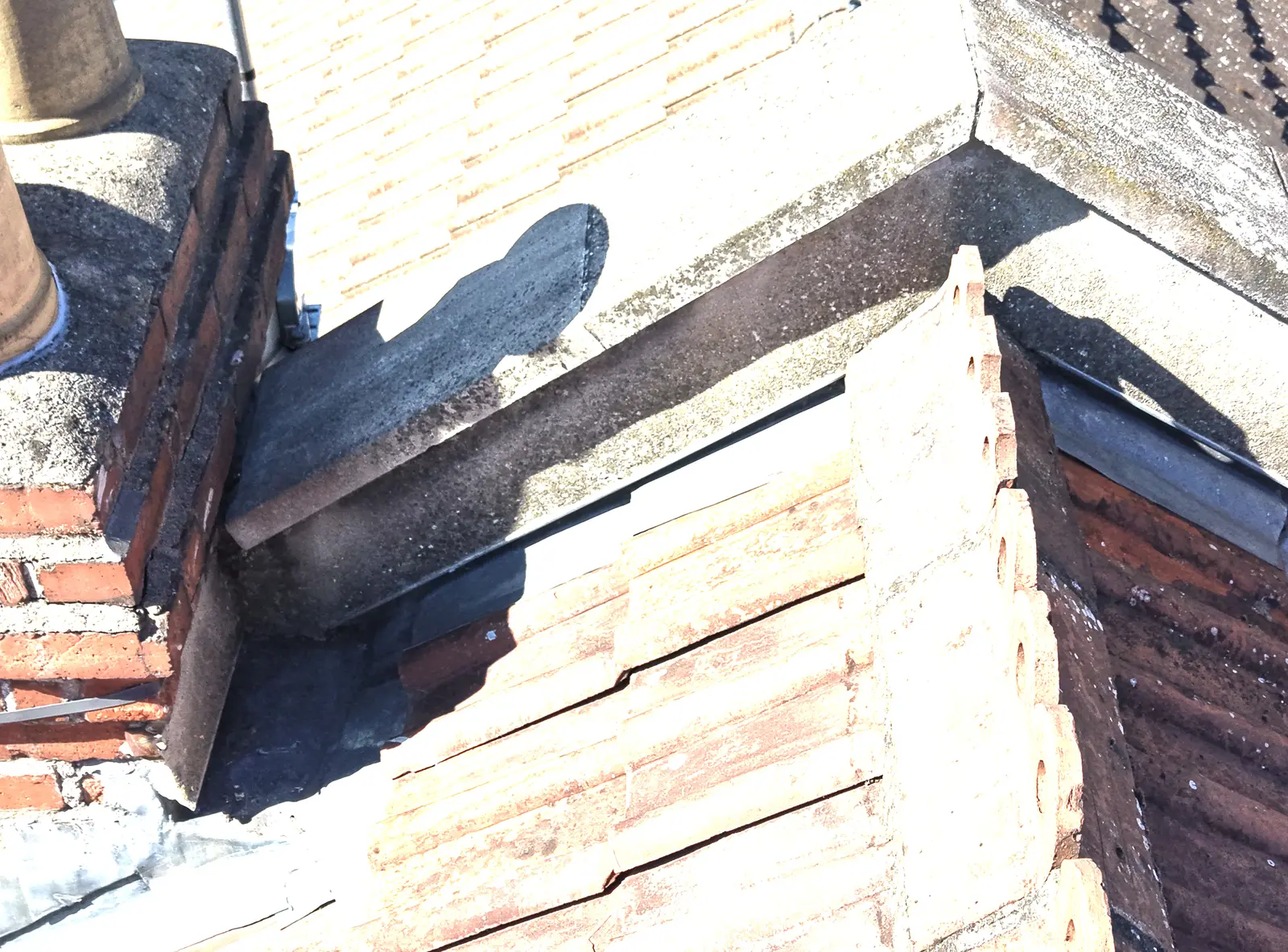
Missing flashing at a chimney abutment
A gap in the weathering detail corresponded with the area below which minor water ingress had been observed in the loft. The report recommended installing suitable flashing and making good.
Anonymised residential case study · Bristol
A systematic drone roof condition survey turned hard-to-reach details into a clear evidence record and prioritised maintenance plan for a mid-terrace home.
The brief
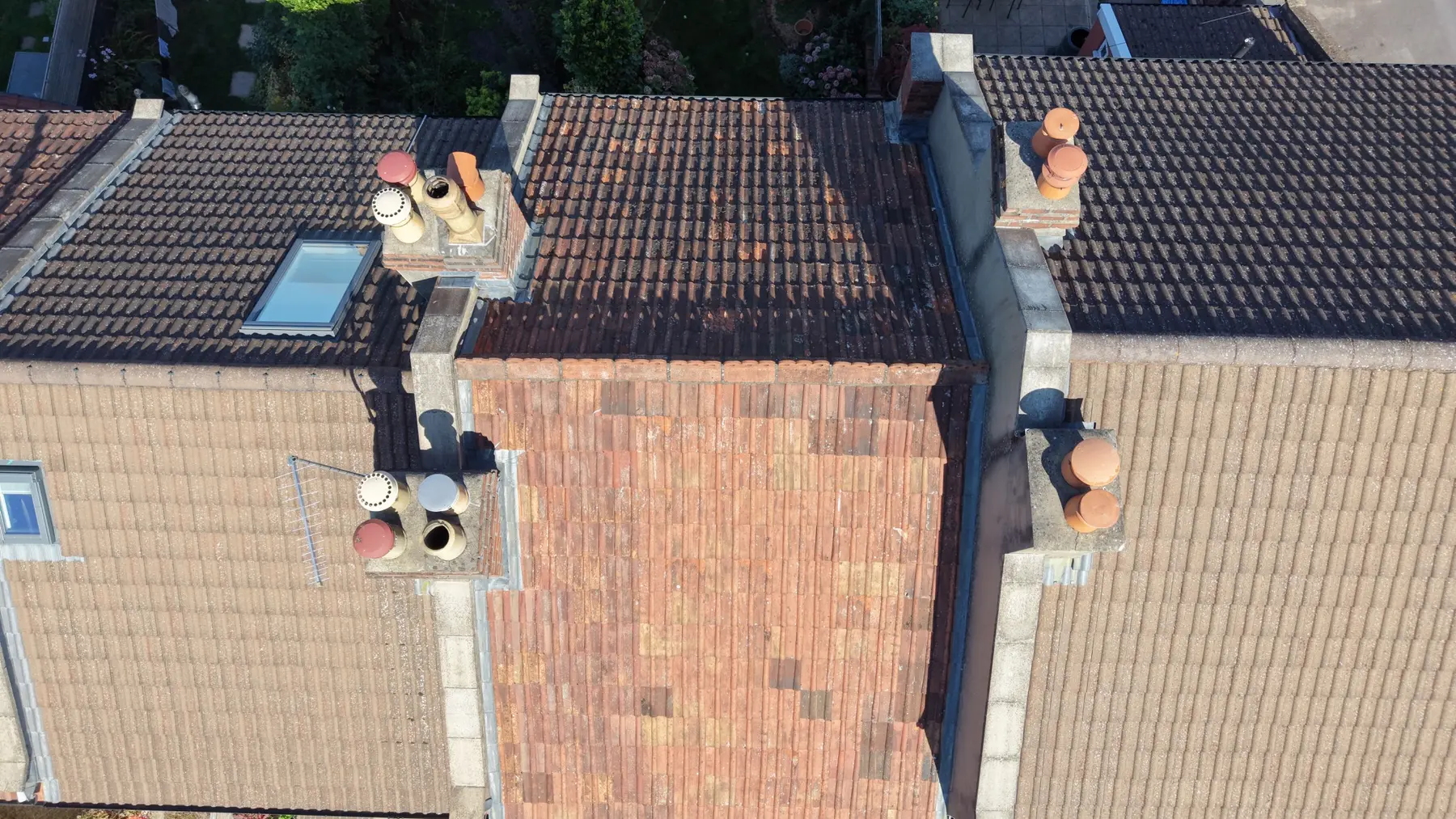
The client wanted an independent visual record of the roof covering, chimneys, parapets, flashings, gutters and abutments, with particular attention to a suspected route of water ingress visible from the loft.
A drone was used to inspect the front and rear pitches from multiple angles. The final report organised every observation by roof area, referenced it to labelled photography and separated condition from repair urgency.
Privacy: the property address, client names, contact details, survey date, report reference and aviation licence identifiers have been withheld. Images have been cropped and stripped of embedded metadata.
What the survey found
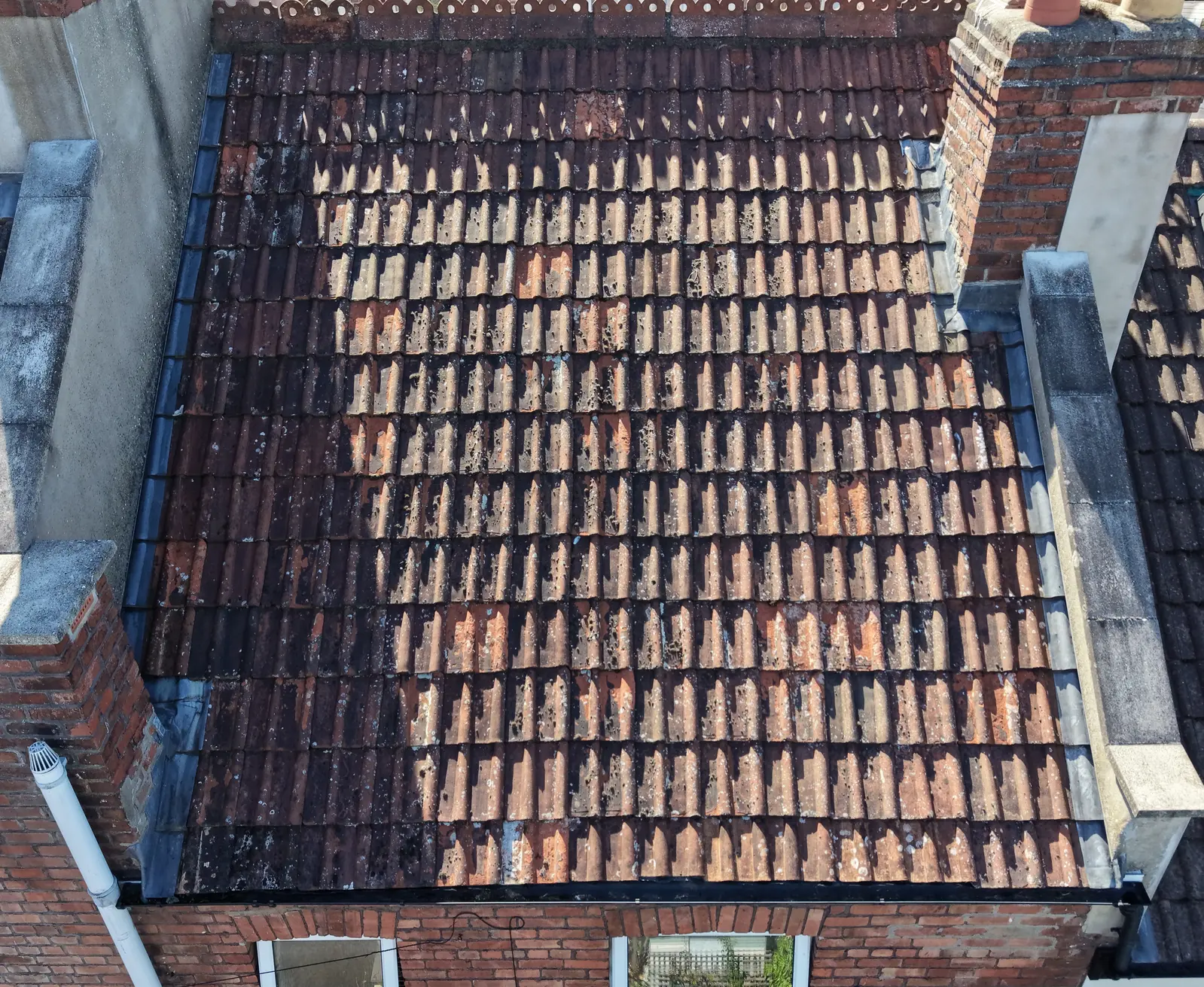
The roof covering and most flashings were in generally good visible condition. The survey still identified a localised detail that justified prompt attention and several routine maintenance items.
A gap in the weathering detail corresponded with the area below which minor water ingress had been observed in the loft. The report recommended installing suitable flashing and making good.
Minor brick spalling was recorded. Repointing with a suitable lime-based mortar was recommended.
Local cracking and vegetation growth were identified for repair, removal and making good.
Debris had accumulated on the rear pitch. Gentle cleaning was recommended during planned maintenance.
Evidence-led reporting
The high-resolution imagery allowed individual roof junctions to be reviewed and recorded without walking on the roof. Findings were graded and given a practical priority, helping the client distinguish urgent investigation from routine upkeep.
The result
The client received a concise condition summary, an observation schedule, 17 labelled images and a prioritised recommendation section. The report gave them a clear basis for discussing targeted repairs with a roofing contractor.
The drone survey avoided assumptions based on a ground-level view. It documented the likely defect, recorded the wider roof condition and reduced the risk of commissioning broad repair work without clear evidence.
This was a non-invasive visual inspection of elements visible from the drone imagery. Concealed construction, structural performance and watertightness testing were outside the survey scope.
Drone roof surveys
Share the property address, the concern you are investigating and any known access issues for a tailored scope and quotation.